
Mechanisms Not Mechanics
Understanding the mechanisms behind the manual therapies you use, will forever change the way you design and deliver your treatments.
I know that when I went through my undergraduate training, much of the explanations I was given for how the various manual therapies work, was based on the mechanics of force, load and tissue response. It was a case of – “you do this, and the tissue responds like this”.
Pulling apart fibres, breaking up adhesions, lengthening tissues and “releasing” just about everything.
I look back on this now and shudder to think about the explanations I would have been giving to my patients at the time. Worse yet, the explanations I would have been using in the early part of my teaching career also!
Fast forward a couple of decades, and our understanding of how manual therapies work has deepened and improved dramatically. We understand more clearly now that the force we apply to the body, does not directly impact the tissues in the way we once thought.
What we do with manual therapy is “talk” to the nervous system. We provide sensory input to a myriad of specialised mechanoreceptors, that in-turn “talk” to the central nervous system, which then produces a complex cascade of chemical and neurological responses, which then alter how we feel in our body.
That release that we feel after a deep massage is simply an improvement in neuromuscular control facilitated by the spinal cord and brain, down regulating muscle tone, which increases range of motion.
That joint mobilisation or manipulation doesn’t shift a bone back into place, it optimises the proprioceptive communication between the joint and the CNS, which modulates pain at the spinal cord and in the brain and decreases protective tension in surrounding soft tissues, thus providing greater freedom of movement at the joint itself.
If we hold in our mind, the idea that the input we provide to the surface of the body, can produce very specific outcomes via the interactions occurring between the macro (tissues, nerves, blood vessels, etc) and the micro (mechano-receptors, hormones, neurotransmitters, etc), then we need to consider the inputs we choose should be based on the specific desired outcomes we seek.
Put more simply, when thinking about which pathology or clinical presentation we are treating, selecting the specifically appropriate manual therapy intervention is key.
To give a clinical example, if you are addressing Thoracic Outlet Syndrome with a compression site at the pec minor, then a deep tissue massage technique applied to the pec minor may not be appropriate.
TOS is a compressive condition which results in mechano-sensitivity to the brachial plexus. In other words, the nerves of the brachial plexus have become hyper-sensitive to pressure or compression. Massage to the pec minor may increase pressure on the nerves, causing an increase in associated neurogenic inflammation present at that site. This can of course lead to more pain and associated symptoms.
If we apply an improved level of understanding of mechanisms of manual therapy to this presentation, we may instead choose treatment approaches that seek to reflexively reduce the resting tension of the pec minor without compression, such as positional release technique, dry needling, or muscle energy technique.
Additionally, applying neuro-dynamics (nerve flossing / gliding) can assist in reducing the concentration of inflammatory chemicals present at the site of the affected nerves. This happens by the intra-tissue pressures applied to the nerve as it slides between surrounding tissues. Nerves do not have their own in-built fluid drainage system, so neuro-dynamic techniques can directly assist in supporting this process.
Every clinical presentation has a specific pathological mechanism at play, and therefore there will be a corresponding outcome which we seek to achieve through any manual therapy intervention.
The risk that I often observe in inexperienced manual therapists comes from a lack of understanding how these outcomes are achieved, so they simply rely on techniques they are familiar with, rather than choosing something that is best suited to the task
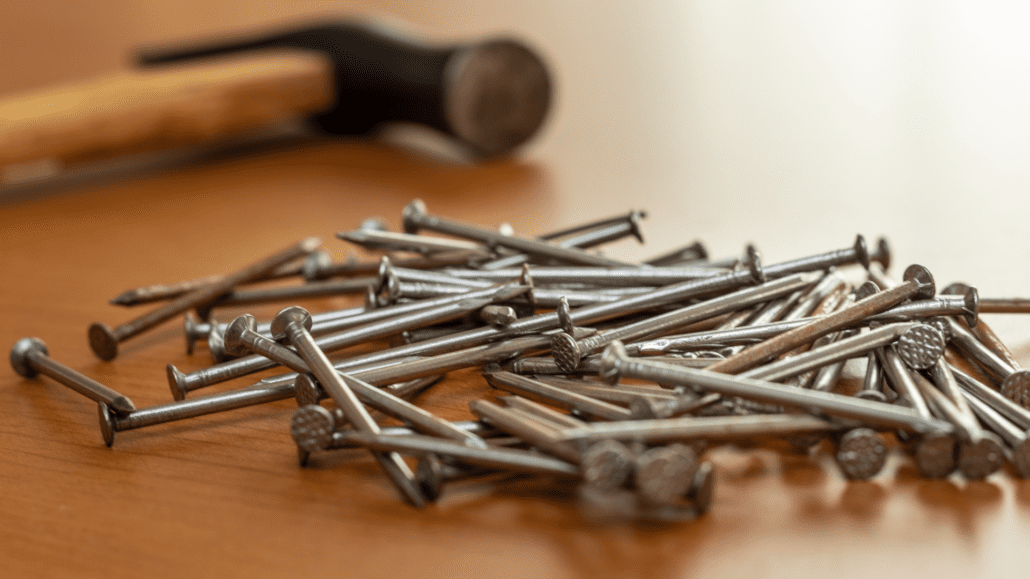
The old saying
“If all you have is a hammer, everything looks like a nail”
comes to mind.
Seemingly in opposition to the ideas I’m sharing here, exists the fact that much of the pain modulation we achieve through manual therapy occurs as a result of two systems of effect. These being the pain gate mechanism, and the descending inhibitory control system.
Almost all of the manual therapy techniques we might choose to use, bring into play one or both of these processes. So, one could argue that it doesn’t matter what we do, because it will likely result in the reduction of pain. True in part (providing the application doesn’t create further irritation), but careful consideration of the pathology, and the specific mechanisms of effect achieved by each manual therapy intervention, will reveal a more optimal approach to select from.
Then, when we couple that selection with the understanding of the level of sensitivity of the patient’s presentation, their past experiences with manual therapy, their beliefs and expectations, the chronicity or acuteness of the condition, and various other individual factors, we can then narrow our treatment planning down even further to choose a specific and tailored approach.

If I can give you one piece of advice based on all of this, it is become a student of mechanisms.
Understanding the mechanisms at play in pathology is crucial and will drive clinical reasoning.
Understanding the mechanisms at play in manual therapy is what will help take your clinical reasoning and turn it into patient outcomes.
