
The best exercise..
We could spend hours searching the internet for the “Best exercise for (insert pathology)”. Well, I will save you the time and tell you right now!
The best exercise is… the one your patient enjoys!
The key to getting people moving is finding out what they enjoy doing. The more they enjoy it, the more likely they are to do it! Then TA DAA! The barriers to exercise compliance start crumbling down.
If my patient tells me, they love to play netball. I might ask…
What is stopping you from playing today?
Sometimes people need some reassurance and confidence that it is ok, and safe to move.
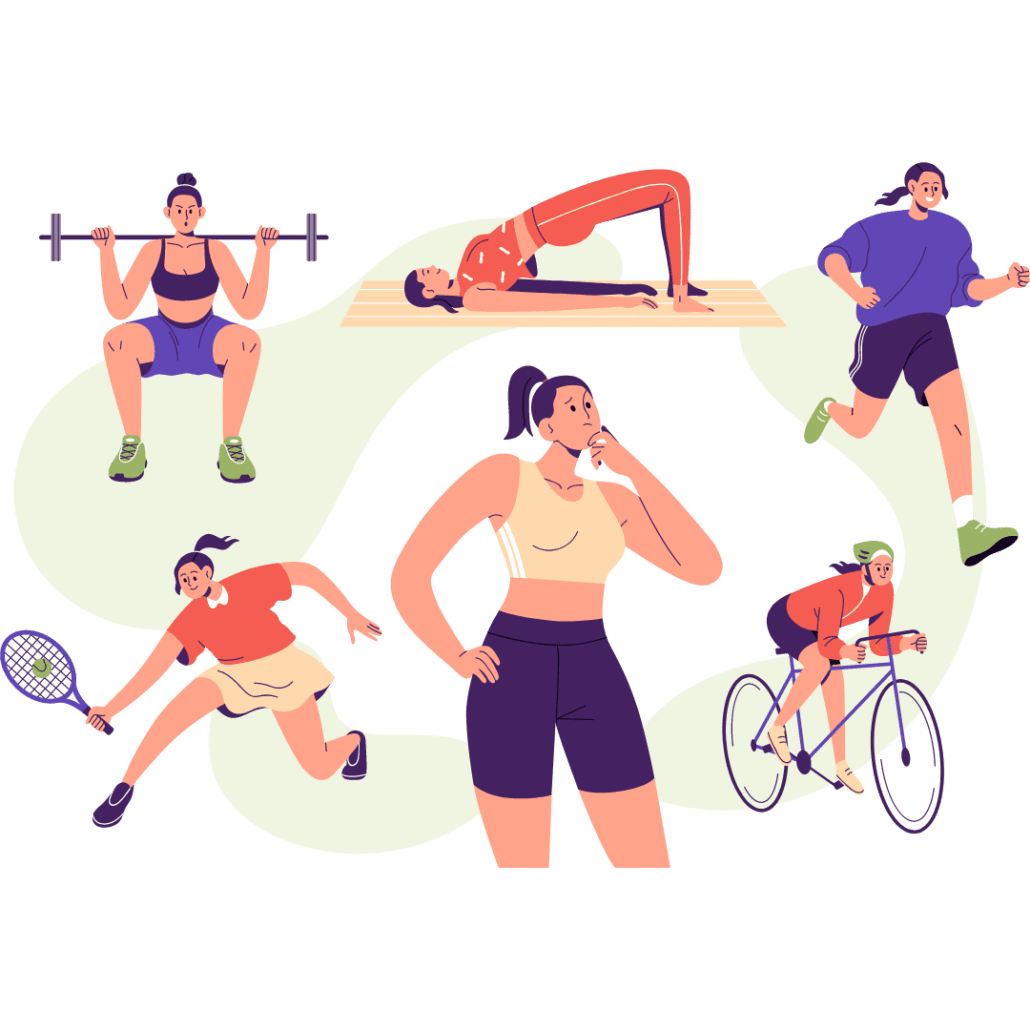
You don’t need to be prescribing 3 sets of 10 reps of glute bridges for back pain… Could they walk on the beach, run with the dog, go rock climbing, do some gardening, kick the soccer ball with their kids, play a game of lawn bowls etc. It does really matter the type of activity as long as it is enjoyable and consistent.
“But it’s too painful to exercise”.
I get it, it can be sensitive and scary for some people to engage in exercise if they have a long history of pain. But remember, pain is not a reliable indicator of tissue damage. Start with a little bit and then progress.
When they are sensitive, the duration and intensity of the activity may need to be regressed, but ideally over time, the training wheels can come off, and the volume and intensity should be progressively increased.
Exercise doesn’t need to be in the form 3 x 10.
Let’s be honest… no one is doing their glute bridges in front of their TV and absolutely LOVING IT! No one!
How specific do we really need to be?
Don’t get me wrong, specificity is important, depending on the population and their goal, however, to engage the general population in some general exercise its best to keep it simple. No need to add the extra noise of 10 stick figure drawings that they need to complete 4 times a day. There is plenty of room to be more specific in the future, if needed.
Remember, there is no one exercise that is better than another.
General exercise can be the gateway to reducing pain and improving quality of life.
So next time you are thinking about what to prescribe to the general population with chronic pain, ask these questions:
1️⃣ Do they enjoy it?
2️⃣ Is this something they can do regularly?
3️⃣ Does it fit in with their schedule / life?
4️⃣ Can they start today?
Start with those simple question and this will give you a nice base to progress from.
Good luck!